Archive for the “reading & writing” Category

I was editing a blog post at work the other day –  it may surprise you to learn that writing this blog is not my job – and I amended “the data says” to “the data say” because as everybody pedant knows, “data” is the plural of “datum.” I didn’t think much more about it.

Then somebody “corrected” me and said it was wrong.  I fired back some citation or other and didn’t think much more about it.

Then a consultant making a pitch for our business chided us in his pitch presentation on our lousy grammar by citing that very post. (Dear consultant guy: 1. you really should make sure your client is unambiguously in the wrong, and 2. there’s a sentence fragment in the middle of your own blog post on the subject of grammar. At least we agree that grammar counts.)

Every geometer knows that two points determine a line, and now – counting the original author – I had at least two smart people saying that data should take a singular verb.  I needed to think more about this.

There’s plenty of evidence that I was right to write “the data say” but also plenty that “the data says” is not wrong. The estimable Grammar Girl has a good blog post that begins by complicating things – it’s not about data being singular or plural; it’s about data being or not being a mass noun – and ends with some good guidance about picking your path and sticking to it.

I’ve come around to a different idea.  Using a possibly controversial construction is a no-win situation.  You either earn points with antiquarian scholars and sound overwrought, or you please the crowd and sound dull to the nitpicky.  It’s a bit like the forcefully correct use of “whom.” Either way you risk some people thinking you’re careless or ignorant.  If you’re got a sentence, especially a headline or title, that forces the reader to think about whether a word in it is right or wrong, I think it’s time to choose a different word or write a different sentence.

Perhaps instead of

the data say… or …the data says

we might try

the survey says… or …my research reveals… or …4 out of 5 dentists agree

Have I given in to the forces of the incorrect by avoiding the issue?  I hope not.  I don’t suggest anybody stop correcting errors of “you’re” vs “your” or allowing “alot” to slide by for “a lot” but when there’s room for common usage to differ from correct usage or where usage is evolving, making your readers think about grammar instead of reading and digesting your point is a bad idea.

Tags: ,

Comments 3 Comments »

I couldn’t help but notice the estimable Jason Scott’s profane and precise review of the new(ish) US passport design, not least for his use of the word “glurge.”  I completely agree, and the RFID chip makes me sad, too.

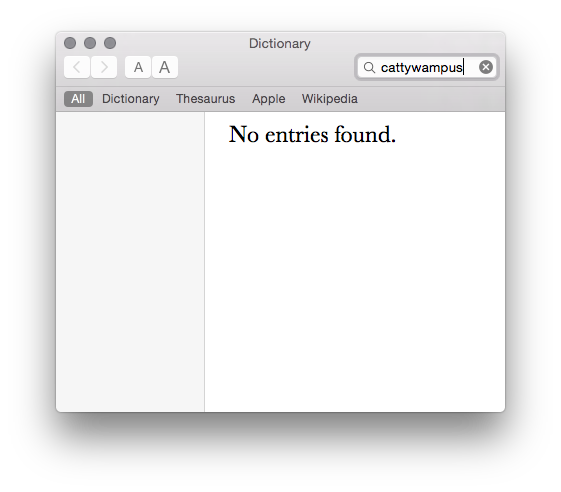
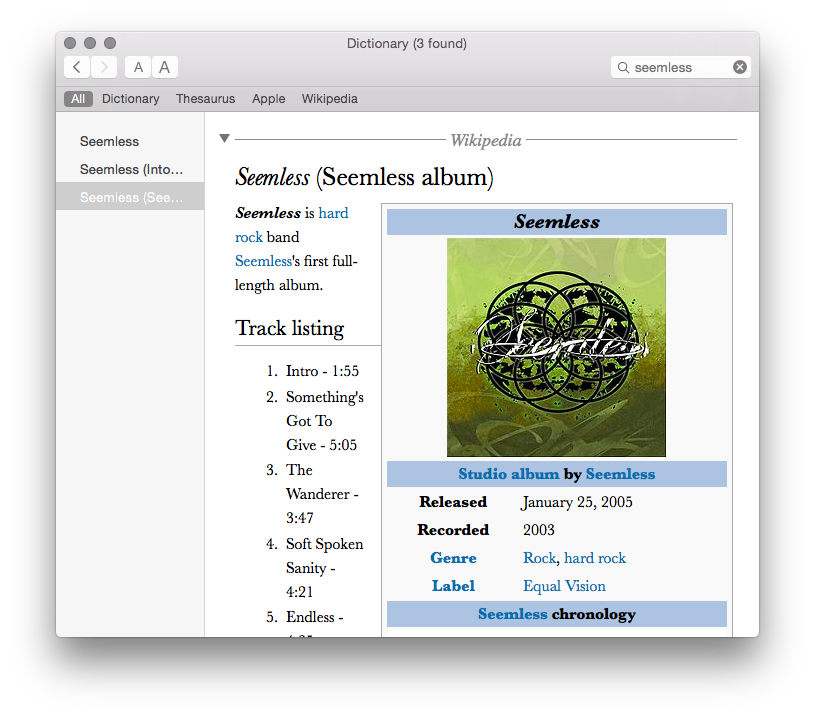
The Mac’s dictionary app drew an amusing blank, and the OSPD claims ignorance of glurge.

It turns out that glurge comes from Snopes.com, the great debunking website.  I quote therefrom:

Glurge is a term specific to snopes.com, coined in 1998… The word was invented by Patricia Chapin, a member of the urban legends discussion mailing list run in conjunction with this site. At a loss for words to describe the retching sensation this then-unnamed category of stories subjected her to, she fashioned a word that simultaneously named the genre and described its effect.

Glurge … is the body of inspirational tales which conceal much darker meanings than the uplifting moral lessons they purport to offer, and which undermine their messages by fabricating and distorting historical fact in the guise of offering “true stories.” Glurge often contains such heart-tugging elements as sad-eyed puppies, sweet-faced children, angels, dying mothers, or miraculous rescues brought about by prayer. These stories are meant to be parables for modern times but fall far short of the mark.

So now you know.

Tags: ,

Comments No Comments »

As you may know, the first rule of my book club is, well, I can’t tell you the first rule.  One of the other rules is, when it’s your turn, you pick the book and that’s the book.  No discussion, voting or appeals are needed.  Sure, there’s sometimes some friendly wrangling, but when push comes to shove, we read what is chosen for us.  Last month, it was a lesser-known early work by Herman Melville, Mardi, and a Voyage Thither.  The relative obscurity of this work provided some challenges and opportunities, as it’s pretty much out of print, but also out of copyright.

Having exhausted the obvious first choices of public libraries and used bookstores and come up empty, I decided to see what else was out there.  Regular and online bookstores had or could order the book, but at 300+ pages each for two volumes, I thought this might finally be the time to look into electronic readers.  The idea of carrying hundreds of books around in a few ounces of electronics never appealed much to me, but the idea of carrying around one very large book in a smaller form factor was starting to make me think again.

Kindle, Nook, iPod, iPad, PC – no shortage of reading devices, each covered plenty well by pundits worthier than I.  But what about the media itself?  It turns out that there’s something called Project Guternberg, a collection of free downloadable ebooks, generally ones that have landed in the public domain after their copyrights expired.  There’s also Google Books of course, where you can read but not generally download books.  Reading books on a 5 pound laptop wasn’t the answer I was looking for.

After some poking around, I found what I thought would be a terrible solution, but the price was right.  I downloaded the free Mobipocket reader for my phone and picked up the Melville at Project Guternberg.

Mardi on my HTC

As it turned out, I read 350 pages of turgid 19th Century prose a few pages at a time on my two-train commute over the course of a month or so.  It wasn’t ideal, but it was certainly convenient.  I could read with one hand while holding on for dear life with the other.  I didn’t have to worry about losing my place and even in a very crowded train, the device was small enough that I didn’t worry about elbowing fellow passengers while using it, and it was easy to slip back into a pocket without wrangling a book or larger device into and out of a bag or case.

I wondered if there was hope for paper.  And then I met Paige.

In the back of the Harvard Bookstore is a Rube Goldberg contraption consisting of two different printers, a couple of computers and a clear plastic box containing some very sharp blades and pot of boiling hot glue.  It’s called Paige M. Gutenberg.  Get it?  It’s a book machine.  In goes paper, ink, glue and a digital file, and out comes a perfect-bound book in a couple of minutes.  It’s a wacky marriage of cyber- and steampunk. You can smell the glue when you stand near it. I had to try it.

The Book Machine

After some consultation with the staff, I learned that you first have to select (which generally means buy) the digital file from a variety of sources, and then once the machine is warmed up, the printing and binding takes just a few minutes.  Unfortunately, for whatever reason, the files of Mardi were as costly, perhaps more so, than the pre-printed books.  But in the spirit of investigation, I paid $30 for volume two and watched Paige crank it out.  The print quality was great and the paper stock pleasant.  The cover (also printed on the spot with a different printer on different stock) was a little on the cheap side, and the binding was not quite perfect perfect binding.

All in all, if you really need it right away or it’s out of print, this is a great thing. But I fear it’s years late and more than a few dollars short in holding back ebooks.  Sure, it makes high(ish) quality printing and binding on demand available to small-time authors or artists, but even a five minute wait at a bookstore compares poorly with near-instant delivery to a computer or handheld device.  And if you insist on paper, you can often get cheaper and higher quality books shipped in a few days – even same day in some cities – from the giants of ecommerce.

Still, I’m glad there are options, especially because those options are evidence of interest in the business of publishing which means people are still reading, and that’s good.

Tags: , , ,

Comments No Comments »

Getting information in three languages you can’t speak is much more informative than getting it in just one.

Trilingual sugar

Comments No Comments »

Last week, we took Book Club to a new level with a guest appearance by the author – Belmont’s own Toby Lester – of our chosen book, The Fourth Part of the World.  I had worried that such an august presence would impede the club’s traditional focus on wine, gossip and whingeing about our jobs, but we had plenty of time for all four parts.

Lester’s book is a vivd and polymathematical ramble across a few centuries of history leading up to the European “age of discovery” largely seen through the prism of mapmakers, especially a certain Waldseemüller, who in 1507 first printed “America” on a map of the hemisphere from which I am now writing.  We got a fresh look at some familiar figures like Marco Polo and Christopher Columbus and some wonderfully-told new (to most of us) stories.  Have you heard of Prester John?

The Fourth Part of the World reminds us that Columbus was nowhere near the first to conceive of the world as round, and it tells the story of many approximations close and not so close of the actual size of the globe, and the gradual discovery by Europeans of the true arrangement of the continents and their contents.  Looking at the beautiful plates I was reminded that while today’s schoolchildren are pretty clear on the roundness of the earth, they might not be as clear on the arrangement or content of the lands upon it.

Perhaps you remember last Fall’s grumbling about non-educational globes for sale at Target?  Well, a quick scan of DonorsChoose shows over 100 classrooms in the US in need of globes and maps.  So, as if you haven’t been harangued enough on this blog to do some good in the world, I urge you to consider giving some of your holiday charity budget to one of these worthy projects – our children need the best understanding of the shape of the world and its different people that they can get.

Tags: , , , ,

Comments No Comments »

(C) David Karp and original artists. All rights reserved. Please respect the intellectual property rights of all authors and artists.