Posts Tagged “marketing”

I was having a great discussion about all things marketing last week, and it got on the topic of the difference between B2Band B2C marketing approaches. I jumped out on a limb and claimed that they are in fact the same – in each case, the goal is to deliver the right message to the right customer at the right time.   The standard argument is that a business buyer “isn’t spending his/her own money” and therefore behaves differently than a consumer buyer.  They may (and do) behave differently, but I don’t think whose money is at stake is the core issue.

Both the individual and the corporate buyer want to get the best deal they can, and the definition of “best” is seldom a clear thing.  I believe people buy when they feel they have a good deal. Even the stereotypical government procurement officer doesn’t automatically choose the lowest bid, he or she must be satisfied that the lowest acceptable bid is accepted, and that the bidder can in fact deliver.  Likewise, the individual buyer makes many purchases that involve others, either directly (as in buying groceries for your family) or indirectly (as in buying a fashion item to impress a mate or a peer.)  Unless you’re a hermit, relatively few of your individual purchases are free from others’ notice, and that can affect your choice.

Some won’t buy unless they have what they think is the best deal (Barry Schwartz calls them “maximizers” in his book, The Paradox of Choice) and some will buy when they have what they think is a good enough deal (“satisficers”) but my point is that both have emotional needs that are not always clearly explained by dollars and product features.  A person’s status in a work or social group is often on the line when buying things for work or for home.

The goal of all marketing is to understand on a deep emotional level the needs of your target buyers and their influencers.  If you start with this premise, you will find your way to the right marketing solution for your target, whether they are “businesses” or “consumers.”  Learn their secret aspirations and hidden worries, and the path will become clear.

Tags: , , ,

Comments No Comments »

The Davis Square Farmers Market opened up again this past Wednesday, making humpday even better. It’s in the parking lot behind the plaza between Starbucks and Chipotle.

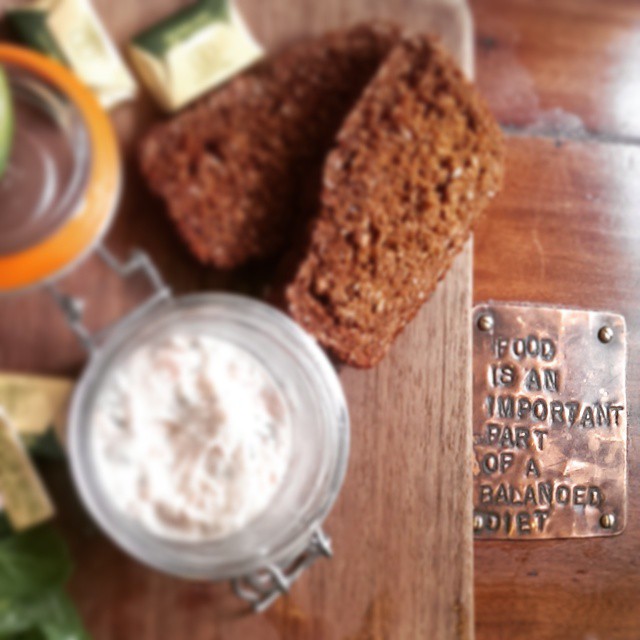
As it was early in the season, there wasn’t a lot of ready-to-eat fruits and veggies, but there was a great deal of potted plants, herbs, lettuces, some rhubarb, and a good collection of meats, cheeses, and breads, plus some fish, chocolate and even soap. A chalkboard at the entrance lists what’s on each day. I picked up some smoked sable (the fish, not the rodent!) from Nantucket Wild Gourmet & Smokehouse, and then got a lime-poppy cake and something called a cheddar snail at an unmarked bakery stand.

Since I’ve eaten all these goodies before having a chance to photograph them, I’ll take a moment to offer up some unasked-for advice to people running farm market stalls: it’s a marketing opportunity.  Compare these two experiences…

1. Hi Rise Bread Co.

This is a pretty well-known bakery cafe in West Cambridge, but that shouldn’t let them off the hook for having no website (that I could find), no signage at their farm stand, and no takeaway material at all – no brochures, no business cards, no paper bags with their logo and address on them, nothing.  Bummer.

2. Nantucket Wild Gourmet & Smokehouse

These folks have their act together, which is important because their farm stand is just about their only retail outlet beyond Nantucket.  They had clear signage, business cards with their website on them, and packaging with all the vital info on it.

I don’t expect farmers and small producers to have fancy marketing – although many do – but I want them to succeed, and that takes some attention to the basics.  So next time you buy some local produce or something at a farm market, ask for a business card or brochure to share with your friends and see what happens.  And if you get one, be sure to actually share it.

Tags: , ,

Comments 3 Comments »

I was mucking out my spam folder (where lots of not-quite-garbage bulk or automated email ends up) and accidentally opened this message which I ordinarily would have deleted on the basis of the subject line alone:

Six questions for $20

Interesting.  Some outfit that thinks I’m a doctor wants to give me $20 to answer six questions.  Or maybe it’s just phishing.  Actually, I think I know exactly the chain of fail that’s about to lead to this organization wasting $20 on me.

Fail #1: Somewhere out there, a contact form I filled in demanded that I give it my “title” and would not proceed until I did.  When this happens, I generally get annoyed and give a bogus answer which is usually “Dr.”  (when “Msgr.” is unavailable) If you want to know my gender or marital status or how to address me in a message, just ask, but those things better be related to what I’m applying for and I’d better be able to skip the nosy ones.

Fail #2: Somewhere out there, somebody sold my name to the medical survey people, or to some intermediary who sold it to them, probably for a premium, since I’m a doctor.  This isn’t necessarily against the law or even against the privacy policy of the site in Fail #1 (I wouldn’t know since I’m very unlikely to read such policies) but it is sort of annoying, and as we will soon see, unprofitable.

Fail #3: Somewhere out there, some medical survey people are aggregating data from real doctors and wiseasses like myself and selling it to who knows whom without so much as a double-check on the qualifications of the survey takers.

So let’s review the value chain here:

  1. I gave up my contact info for nearly nothing
  2. Somebody sold that info for a few cents
  3. Somebody else sold it on for a dollar or two
  4. Somebody offered me $20 for my unqualified opinion
  5. Somebody will sell the data from those opinions for thousands

Not a bad business, as long as you’re not left holding the bag of lousy data.

I think there are a few nuggets of wisdom here that marketers can use:

Nugget #1: When you require an answer to a question, you increase the chance of spurious data, especially when the question has a limited set of responses.  The sales guys always want a phone number, but if you make it required, they end up having to sift through a bunch of 555-1212 and 867-5309 and 382-5633 or worse.  So don’t ask anything more than you really really need to know.  And think seriously about whether the old Mr./Mrs./Ms. categories are really right for your audience.

Nugget #2: If you still insist on buying lists or leads or panels, ask hard questions about where the data came from and how it was collected.  Are they really opt-in?  How confident are we of their accuracy?  What response rate has this list produced for others?

Nugget #3: If you offer an incentive for a survey, be extra careful about how you qualify participants.  Too rich a prize and too loose a screen means money wasted and data watered down.  And for only six multiple-choice questions, $20 is pretty rich.

So I answered my six multiple-choice questions.  They weren’t difficult.  I didn’t even have to fib.  They looked a lot like more qualifiers for future questioning than actual research, but given my answers I probably won’t get called back.  But I did get my $20 gift card.

In an admittedly feeble effort to restore balance to the world, I’m making an offsetting $20 donation to Mrs. F’s classroom in New York State via donorschoose to help buy a globe and some maps.  If you’ve committed data sins like those above, maybe you’ll donate too.

Tags: , ,

Comments 4 Comments »

Last week somebody who should have been working tipped me off to the story of Douglas Bowman, a lead designer at Google, quitting at least in part because his design decisions were being second-guessed and subjected to minute quantitative analysis.  Quantitative analysis at Google?  Who knew? Bowman wrote in his blog,

I had a recent debate over whether a border should be 3, 4 or 5 pixels wide, and was asked to prove my case. I can’t operate in an environment like that. I’ve grown tired of debating such minuscule design decisions. There are more exciting design problems in this world to tackle.

That certainly does sound a bit soul-killing for a creative person.  I hope he was able to tackle some of the more exciting problems too.  He also recounts a story of Google engineers testing over 40 different shades of blue to determine the optimal one.  Bowman sums up his departure with this: “…I won’t miss a design philosophy that lives or dies strictly by the sword of data.

Time to zip up my flame suit.  I like design and designers.  Some of my best friends are designers.  I think this story is another example of a terrible and corrosive attitude that has infected many members of the design profession.  (That’s not to say it’s anywhere near restricted to that profession, but let me piss off one group at a time here.) One of the important differences between being an artist and being a designer is that designers make products or parts of products for customers, and they are answerable to the wants and requirements of those customers. An artist – and only an artist – is allowed to say that the critics are fools and follow his or her creative destiny wherever it leads.

Inspiration and creativity have a vital place.  I don’t think anybody wants to lose those things, but nobody’s inspiration is above questioning, testing and probably incremental improvement.  Google is a profit-making company and they have an obligation to their stockholders to measure any employee’s work and its contribution to the bottom line.  Google sells advertising so they have a very clear interest in making sure that their ads are the most clickable they can be.  Designers are right to want to tackle “more exciting” design problems, but shouldn’t they also have a more open-minded attitude to analytic solutions to the “miniscule” decisions?  Don’t auto manufacturers stick a designer’s work of art into a wind tunnel and subject it to materials cost analysis, safety checks and ergonomic factors?

This story reminds me of some of the less attractive practices of the marketing and consulting professions.  I’ve met plenty of marketers and consultants who tell their customers that their work is the product of genius and cannot – indeed must not – be subjected to testing or measurement.  “You can’t test brand” “you can’t measure PR” and the like.  Accountable marketers call bullshit on this attitude and so should responsible designers if you ask me.

Lest I come off as (more of) a curmudgeon here, let me suggest a possible innovation.   More and more smart marketing departments include a marketing analyst, somebody responsible for counting the beans, measuring the programs, and generally helping keep the whole function accountable to the realities of business.  What if design departments had design analysts?  The fancy pants creative directors could work on the big problems, and when somebody asks, “how many pixels wide should that be?” the designer could shrug and say, “how am I supposed to know? Ask the analyst!”

A simplistic solution, perhaps.  But until designers and marketers accept that their work is part of a complex ecosystem that also includes customers and metrics, they will continue to frustrate themselves creatively and frustrate their employers financially.

Tags: ,

Comments No Comments »

I’ve been saying it for a while, but I think it’s time to blog it before somebody writes a book on it.

I believe that there are at least three things that nearly every American adult belives that he or she is good at, and that in reality, only a small portion of them are very good at any one of them. Unlike that tease of a fortune cookie I got last week, I’m going to list all three:

  1. Driving
  2. Kissing
  3. Marketing

I’m sure you’ll all write in with additions to the list, or perhaps to protest and profess your expertise. Let me be clear: for the vast majority of applicants, I am not interested in testing your expertise in any of these areas personally.

Conversely, I wonder at what, if anything, people widely claim incompetence?

Tags: , ,

Comments No Comments »

(C) David Karp and original artists. All rights reserved. Please respect the intellectual property rights of all authors and artists.